08 January 2026
Accelerating global change and biodiversity loss threaten crop pollination, a key ecosystem service vital for food security and largely dependent on wild pollinators. Increasing climatic variability may reduce pollination stability, but diverse pollinator communities with complementary thermal niches could buffer these effects. This SHOWCASE study,1
29 December 2025
Rising agricultural inputs have increased yields and reduced food shortages but caused major environmental damage, prompting policies such as the EU Green Deal to cut pesticide and fertiliser use, targets that have sparked farmer protests amid fears over food sovereignty, yield gaps and falling incomes, especially following sharp energy and1
31 October 2025
A new SHOWCASE paper, written by project partner Wageningen University, investigates how land-use intensity shapes arthropod communities in Dutch grasslands. Arthropods, which are vital for pollination, nutrient cycling and overall ecosystem health, have declined dramatically in recent decades, largely due to agricultural1
02 October 2025
This pan-European SHOWCASE paper, authored by partners ZALF, Swedish University of Agricultural Sciences, Universitatea Babeș-Bolyai, Agroscope, Wageningen University, CNRS, Reading University, Estonian University of Life Sciences, Centre for Ecological Research and CSIC, explores how1
01 October 2025
This press release was published by AlphaGalileo. Bees, bumblebees, butterflies, and other pollinators are essential for both ecosystems and agriculture, yet their numbers are declining at an alarming rate. A new study, led by researchers from Wageningen University & Research and published in Science on 25 September 2025, shows that1

24 September 2025
A recent Estonian blogpost featured the Estonian University of Life Sciences (EMU), a SHOWCASE partner, and junior researcher Aki Kadulin who contributed to two new European studies revealing that farmers’ decisions to conserve biodiversity depend strongly on their personal values, perceived costs and social context. The same support measure1
24 July 2025
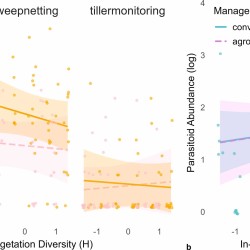
Agricultural intensification has increased crop yields but caused biodiversity loss, pest outbreaks and environmental damage, threatening essential ecosystem services like natural pest control. In response, the EU and Switzerland are promoting sustainable farming practices—such as organic farming, habitat conservation and reduced pesticide use—to1
16 July 2025
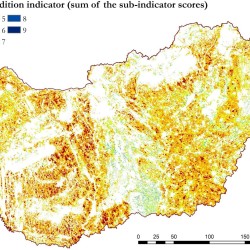
Biodiversity continues to decline despite past conservation efforts, prompting new policies like the EU Biodiversity Strategy, which require national ecosystem condition mapping. However, such mapping, especially for croplands, relies heavily on proxy indicators due to a lack of primary biodiversity data, raising concerns about accuracy. To address1
03 July 2025
As agriculture expands to meet rising demands, biodiversity and ecosystem services often suffer—especially in vineyards, which cover over 7 million hectares globally and still depend heavily on pesticides. Yet, organically managed vineyards in natural habitat-rich landscapes can host diverse communities of pest predators like birds and bats,1
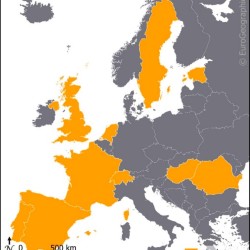
Factors influencing farmers’ decisions to implement biodiversity measures in agricultural landscapes
22 May 2025
Habitat fragmentation in agricultural landscapes poses a serious threat to biodiversity. While measures such as hedgerows and wildflower strips can improve ecological connectivity, little is known about how farmers decide where to implement them. To address this knowledge gap, a SHOWCASE study, conducted by the Leibniz Centre for1